Forgiveness
Forgiveness comes from an open heart ... or it does not come at all.
Blogs By Nancy
Here’s where I spill the tea on whatever’s rattling around in my mind. From the humorous to the heartfelt, with a dash of holy sass and honest-to-goodness grit, it’s all steeped in truth. Whether it’s cozy, raw, or a little rebellious—it’s served with purpose and poured from the heart. Sip, read, and sass along with me.
What Is The Price of a Soul?
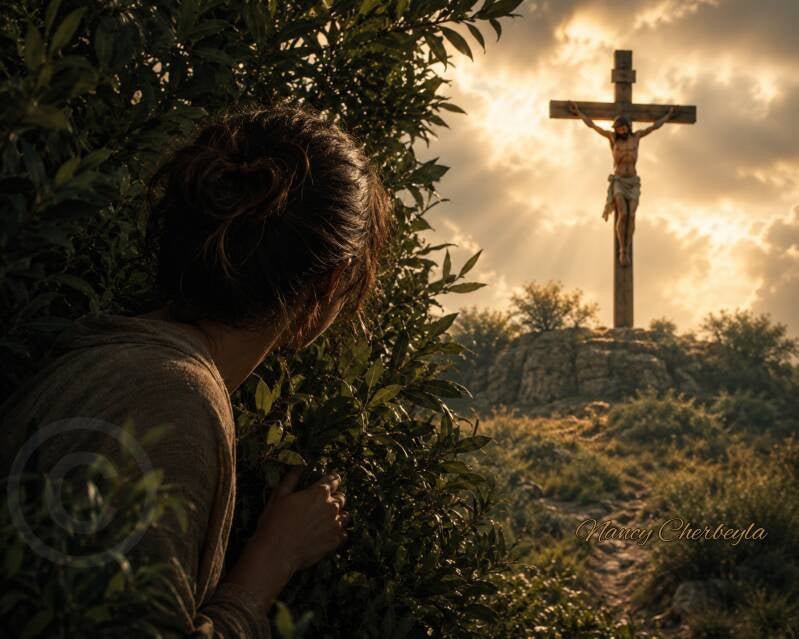
I caught myself saying something today that made me stop.
I was talking about the cost of a Christian app I recently started using. I’m still in the free trial, and I was trying to figure out whether the yearly subscription was around $50 or $70.
And somewhere in that conversation I said:
“You really can’t put a price tag on your soul and your spiritual growth.”
Then almost immediately I thought:
Well, actually… biblically speaking, you can.
And suddenly we weren’t talking about an app anymore.
Because Scripture does put a price on a soul.
It just isn’t a price that you or I could ever afford to pay.
“For ye are bought with a price…”
— 1 Corinthians 6:20, KJV
That price wasn’t money. It wasn’t good deeds. It wasn’t church attendance. It wasn’t knowing all the right verses, saying all the right prayers, or finally getting ourselves cleaned up enough to approach God.
The price was Christ.
And that thought hit especially hard because of something else God has been showing me lately.
I have a habit of waiting until things are presentable.
My home has been caught in what feels like never-ending remodeling and upheaval, and right now it is nowhere near the home I want people to see. So I’ve found myself hiding.
When the house is presentable, I'll invite people over.
When I get things under control, I'll ask somebody to help.
When things look better, then people can come in.
Except there’s a problem with that.
Sometimes I need people to come in because things aren't okay.
I need help getting to “presentable.”
And today, while doing a devotional called Loved While Hiding, I came across an idea that stopped me cold:
God doesn't come looking for the person who is hiding in order to shame the hiding.
He comes to end it.
The devotional took me back to Genesis 3:8–13.
Adam and Eve had sinned. They knew they were naked. They were ashamed. And they hid among the trees.
Then God called:
“Where are you?”
Of course God knew where Adam was.
Maybe the question wasn't about Adam's location at all.
Maybe it was an invitation.
Come out.
Stop hiding.
Talk to Me.
And thousands of years later, I think we still build our own versions of those trees.
We hide behind shame.
We hide behind messy houses.
We hide behind relationships.
We hide behind mistakes.
We hide behind I'll come to God when I get myself together.
But that's backwards.
We don't get ourselves together so we can come to God.
We come to God because we can't get ourselves together without Him.
That realization has been following me all day.
Earlier, I prayed for a young woman I encountered who was hurting deeply. My prayer for her was that she would discover who she is through God rather than trying to find herself through relationships or through other people.
And somewhere along the way, I realized there was something in that prayer for me, too.
Different circumstances.
Same God.
Stop looking everywhere else for what can only be found in Him.
Stop waiting until everything is presentable.
Stop hiding behind the leaves.
Come out.
And then I circled all the way back to that silly little conversation about whether an app was worth $50 or $70 a year.
Is an app worth that much money?
Maybe.
If I use it. If it encourages me to open Scripture. If it gets me praying. If it gets me thinking. If it helps me spend more time with God instead of simply saying that I should spend more time with God, then for me, yes, it's worth it.
But my spiritual life isn't worth $49.99.
It isn't worth $69.99.
It isn't worth $699.99.
There isn't an earthly price for it.
Because the only price that ever mattered has already been paid.
And it cost infinitely more than I could have afforded.
So perhaps the better question isn't:
What is my soul worth?
Maybe it's:
What am I doing with something Christ considered worth paying for?
Today, for me, the answer is pretty simple.
I'm coming out from behind the leaves.
One branch at a time. ❤️
Girl, I Got You

There are two kinds of women in this world.
The first kind sees another woman in a public restroom wrestling with the zipper of a jumpsuit and immediately says, “Honey, turn around. I got you.”
The second kind stands there pretending not to notice while you dislocate your shoulder trying to unzip yourself like a trapped magician escaping from a sequined straightjacket.
Now before anyone gets dramatic, yes, I’m joking.
Mostly.
But let me tell you something younger women may not fully understand: there was once an entire unspoken code among women in dressing rooms, department store bathrooms, church restrooms, banquet halls, and powder rooms.
Back then, women helped each other.
Not in the modern social-media way where “girl, I got you” sometimes means helping somebody lie, cover bad behavior, or dodge accountability.
No.
Back then, “girl, I got you” often meant:
“Your strap twisted.”
Or, if you were raised by women like my grandmother Thurston:
“It’s snowing down south.”
Which was the polite little code phrase for:
“Honey, your slip is showing.”
“You’ve got lipstick on your teeth.”
“Hold still while I fix your necklace.”
“Your hem came loose.”
Or my personal favorite:
“Turn around, honey. I’ll get your zipper.”
And listen, if you’ve never worn a formal jumpsuit with a hidden back zipper, let me explain something to you.
That outfit may look elegant in the mirror, but behind the scenes it’s basically a hostage negotiation.
The fashion industry looked at women one day and said:
“You know what would be beautiful? Making her completely undress in a public restroom stall every single time she needs to pee.”
And somehow we all agreed to participate.
Women back then understood this suffering.
We understood the quiet effort behind looking polished.
The glamorous church lady with perfect lipstick?
She probably had another woman help zip her dress.
And the married women?
Well, the lucky ones had live-in zipper assistance.
Half the husbands of America spent Sunday mornings being roped into fastening necklaces, hooking tiny buttons, zipping dresses, and standing there nervously saying, “Don’t move, I think I got it.”
And if your husband wasn’t home, plenty of women did exactly what my grandmother used to do — walk next door, knock on the neighbor’s door, and say, “Can you help me zip this before church?”
The elegant woman at the banquet?
She probably had safety pins in her purse and blister marks on her heels.
The woman who looked effortlessly put together?
Honey, there was nothing effortless happening behind the scenes.
And that’s what I think people miss now.
Those little moments between women weren’t really about vanity.
They were about dignity.
About composure.
About quietly helping another woman walk back out into the world feeling confident instead of embarrassed.
There was kindness in that.
Not the loud performative kind people post online.
The quiet kind.
The kind that happens in front of a restroom mirror under terrible fluorescent lighting while one woman holds another woman’s purse and says, “You’re fine. Nobody noticed.”
That kind of kindness matters.
And honestly, I think somewhere along the way we lost some of that nuance.
Today, phrases like “girl, I got you” can sometimes mean loyalty at all costs, even when someone is wrong.
But the older version of it was different.
It wasn’t about helping somebody deceive the world.
It was about helping somebody hold themselves together.
There’s a difference.
A big one.
And maybe that’s why I still don’t think twice when an older woman in a restroom asks me for help with a zipper.
I don’t think it’s weird.
I don’t think it’s creepy.
I think:
Of course.
Because somewhere deep down, I still remember the old code.
The quiet understanding that none of us ever really had it all together on our own.
Sometimes we just needed another woman to say:
“Hold still, honey. I got you.”
When Does a Thread Not Fray?
A single thread can be pulled and broken.
Two threads twisted together are stronger.
Three begin to form something that holds.
And when you think about the threads that come after that… the strength only grows.

America is often described as a young country.
At 250 years old, that’s true, especially when you compare it to places like Italy, Egypt, Greece, or England, where history stretches back not just centuries, but thousands of years.
But it wasn’t until recently that I really stopped and thought about what that meant.
When you break 250 years down into generations, it’s not that many. Eight, maybe ten at most. That’s not a distant past. That’s a short line.
And then it hit me.
That line is not just something you read about in a history book.
It is something you can trace through the people in your own life.
My great grandmother, Clara Elizabeth Boyer (née Anderson), was born in 1894 and lived to be 91 years old. She was a woman of a generation that did not simply “stay home.” She ran a household that functioned as a working system. She raised sixteen children. Eight of her sons served in World War II at the same time, making her part of a piece of American military history.
But that was not all.
Women of her generation took in sewing for pay. They did washing and ironing for others. They managed gardens, meals, and the daily operations of a home that often extended beyond their own family. What looked like staying home was, in truth, working from home long before that phrase ever existed.
They did not just keep a home. They helped sustain a community.
My grandmother, Lottie Loretta Howard (née Boyer), was born in 1929 and lived to be 76. Her generation shifted with the times. Women were stepping more into the workforce, and with that came a different kind of need.
So the work changed shape.
She raised her own children while also caring for others, neighbors’ children, family members, helping fill a growing gap. It was still work. Still contribution. Still part of something bigger than herself.
The form changed.
The spirit did not.
Then there is my mother-in-law, Ardyce Gail Haken (née Johnson), who is 79 today. Her generation stepped fully into the world of the working household. She worked for the city, raised her children, and maintained her home. She embraced the conveniences that made life more manageable, but the responsibility never left.
If anything, it expanded.
She is the kind of woman who shows that working outside the home never replaced caring for it. It simply became another layer of it.
And somewhere along the way, without realizing it at the time, I was shaped by all of them.
A thread of women across generations has shaped how I see my country, my values, and my identity.
There is a common idea today that women of the past were “chained to the home.”
But when I look at these women, I do not see that at all.
I see women who worked, adapted, contributed, and carried their families and communities forward.
They were not confined.
They were foundational.
America may be young.
But from the very beginning, women have played an essential role in building it, quietly, steadily, and often without recognition.
And when I look at the timeline now, it does not feel far away.
It feels close.
Closer than most people realize.
Because I am only a few generations removed from the women who lived it.
And now, I carry it forward in my own way.
This is not just history.
This is inheritance.
It lives in the way I see the world.
In the way I carry myself.
In the way I love, work, and stand firm in what I believe.
It lives in me.
I am not separate from these women.
I am because of them.
And long after me, that thread will continue, stronger, deeper, and more rooted than ever.
So when does a thread not fray?
When it is woven through generations…
held together by faith, strength, and purpose…
and carried forward by women who never let it go.
Daughter of a King, Wife of a Good Man

Sometimes life gives us quiet moments that make us stop and reflect. Not loud moments or dramatic ones, just small realizations that settle into your heart and help you see things a little more clearly.
One thought has been sitting with me lately.
I am the daughter of a King.
And I am the wife of a good man.
Those two identities might seem very different at first, but the more I reflect on them, the more I realize they share something important in common. Both are revealed through action and character.
A king is not truly known by the crown on his head. A king is known by the way He leads, the way He protects, and the way He cares for all who belong to Him. His character is not revealed by title alone, but by the choices He makes and the actions He takes.
When Christians talk about being children of God, it is easy to focus on the title, daughter of the King. But that title is not meant to make us proud or entitled. It is meant to remind us of the character we are called to reflect. If our Heavenly Father shows love through action, patience through action, and grace through action, then as His children we are called to live in that same spirit.
Love is not only something we say.
Love is something we do.
Marriage works the same way.
Anyone who knows my husband knows he is a hard worker. Long hours and long weeks have always been part of who he is. But recently there was a moment that reminded me of something deeper than work. There was a moment when a choice had to be made, and without hesitation he chose our marriage. He chose us.
He chose to stand beside me.
It was not loud or dramatic. It was simply an action that spoke louder than words. And in that moment I saw again what I have known for years. I am married to a good man.
When someone loves you like that, not just with words but with action, it does something inside you. It makes you want to rise up and meet that love with your own character and your own choices.
It makes you want to live a little better.
To reflect a little more.
To carry yourself in a way that honors both the love you have been given and the life you have been entrusted with.
I have always thought about diamonds and their cuts in a similar way.
Some diamonds are cut in what jewelers call a brilliant cut. These stones have many small facets designed to scatter light in every direction. The effect is bright and energetic, with flashes of light constantly catching the eye.
Other diamonds are cut very differently. An emerald cut has long, clean lines and step like facets. Instead of scattering light everywhere, it draws the light inward and reflects it back in layers. When you look into an emerald cut stone, the reflection seems to travel deeper and deeper, almost like looking into a hallway of mirrors.
Both cuts are beautiful.
But they reveal light in very different ways.
Some lives are built like a brilliant cut, full of movement and light, always flashing outward.
Others are built more like an emerald cut, where clarity, depth, and reflection matter more than the flash.
But a diamond is never just the center stone alone.
What surrounds it matters too.
The setting, the smaller stones around it, and the way the band holds everything together all shape how the light is carried and revealed.
Life works the same way.
Our character may be the center stone, but the people we surround ourselves with, the values we choose to hold close, and the relationships that frame our lives all influence how that character is revealed.
Choose those things well, and even a quiet, reflective life can carry extraordinary beauty.
Being the daughter of a King reminds me who I belong to.
Being the wife of a good man reminds me who I walk beside.
Both call me to live with intention, gratitude, and reflection.
And when I stop and think about it, I realize something simple but powerful.
I have been blessed in both directions.
I am a daughter of a King.
And I am the wife of a good man.
© Reserved: My Relationship With God

I was adding a copyright symbol to an image I created in memory of my sister when something unexpected happened.
I paused.
That tiny little © was not about control.
It was not about money.
It was not even about protection in the legal sense.
It was about honoring what matters.
That image came from my hands, my memories, my grief, my healing. If someone wants to use it, they are welcome to ask. Sometimes the answer will be yes. Sometimes it will be no. Sometimes it will come with conditions. But one thing is non negotiable. It does not belong to the public just because it exists.
And that is when it hit me.
My relationship with God works the same way.
© Reserved.
Not public domain.
Not open for commentary.
Not available for edits, rewrites, or spiritual hot takes.
It is mine.
God and I have a relationship that was authored quietly. Built over time. Shaped by grief, mercy, questions, silence, and grace. Other people do not get to brand it, correct it, weaponize it, or decide whether it meets their standards of what faith should look like.
They can witness it.
They can respect it.
They can ask about it.
But they do not get to take ownership of it.
Some people practice faith loudly. On stages. In captions. With volume and certainty and bullet points. That is their lane. Mine is different. Mine is reverent. Intentional. Guarded. And that does not make it weak or lacking.
It makes it sacred.
Copyright does not exist to stifle creativity. It exists to protect what was created with care. And God does not guard relationships to restrict us. He does it to preserve what is holy.
Not everything sacred is meant to be handled by the crowd.
Some things are meant to be held.
Stewarded.
Named.
Protected.
Just because I do not put my faith on display does not mean it is absent. Just because I do not invite commentary does not mean I am hiding. And just because I set boundaries does not mean I lack conviction.
It means I understand value.
So yes, my images are copyrighted.
And so is my walk with God.
© Reserved.
Handled with care.
Permission required.
“Above all else, guard your heart, for everything you do flows from it.”
Proverbs 4:23
When Loyalty Becomes a Threat: A Reflection on David, Saul, and Family Dynamics

There’s a moment in the story of David that has always stayed with me, not the giant, not the sling, not the crown, but the tension that follows after the victory.
David does everything right.
He shows humility.
He honors authority.
He gives credit to God.
He loves Saul like a father.
And yet… Saul grows threatened.
Not because David did wrong but because David grew.
That dynamic doesn’t stay on ancient pages. It shows up quietly in families, churches, and communities every day.
When Growth Is Misread as Disloyalty
David didn’t seek power. He didn’t undermine Saul. He didn’t rally supporters. He simply lived faithfully and that was enough to unsettle someone whose identity depended on control and comparison.
In families, this can look like:
A person who grows healthier being labeled “difficult”
Boundaries being framed as rejection
Independence being mistaken for arrogance
Truth being called “argumentative”
Not because it is but because it disrupts the unspoken order.
Dysfunctional Peace Is Not Biblical Peace
There’s a common misconception that family loyalty requires silence, endurance, and emotional self-sacrifice at any cost.
But Scripture never commands people to maintain peace by abandoning truth.
Biblical peace is not the absence of conflict ... it is the presence of right order.
David honored Saul without surrendering his integrity.
And eventually, he had to step away, not in hatred, but in wisdom.
That distinction matters.
When Grace Only Flows One Direction
David extended grace repeatedly. Saul returned suspicion, control, and accusation.
This is a painful pattern many people recognize:
One person is expected to forgive endlessly
Another is never asked to self-reflect
Accountability is uneven
Some are protected, others scrutinized
Grace that only flows downward is not grace ... it’s hierarchy disguised as righteousness.
Choosing Distance Is Not Choosing Disdain
David didn’t stop honoring Saul because he lacked love.
He stepped back because proximity became unsafe ... spiritually, emotionally, and relationally.
Sometimes distance is not punishment.
It’s preservation.
And choosing not to participate in a dynamic that harms you is not rebellion ... it is discernment.
A Final Thought
Scripture does not command emotional self-sacrifice for dysfunctional peacekeeping.
It commands truth, wisdom, and right order.
David’s story reminds us that you can love people deeply and still refuse to shrink to keep them comfortable.
And sometimes, the most faithful thing you can do…
is step out of the line of fire.
1 Samuel 18:8–9
“And Saul was very angry, and this saying displeased him. He said, ‘They have ascribed to David ten thousands, and to me they have ascribed thousands, and what more can he have but the kingdom?’ And Saul eyed David from that day on.”
In plain terms:
Nothing changed about David ... Saul did. David didn’t become arrogant, rebellious, or disloyal. Saul’s insecurity rewrote the story in his own head.
Faithfulness began to look like a threat. David’s growth and God’s favor weren’t celebrated, they were resented.
From that moment on, everything David did was filtered through suspicion. Once insecurity took root, Saul could no longer see David clearly or fairly.
When “Overwhelmed” Becomes a Weapon

There is a real kind of overwhelmed.
And then there is the kind that gets used as a shield.
Real overwhelm looks like this:
Someone says, “I’m in over my head. Can you help with this specific thing?”
Or they accept help that isn’t perfect and say thank you anyway, because relief matters more than control.
What real overwhelm does not do is stay silent, accept help, and then later resent it.
That is not overwhelm.
That is control mixed with entitlement.
Here’s the difference.
When someone is truly overwhelmed, they communicate clearly or they lower their expectations. They understand that help offered under imperfect circumstances will look imperfect. They are grateful because they know the alternative was doing it alone.
When someone is not actually overwhelmed, they do something else. They keep mental score. They replay events after the fact. They rewrite history to fit a narrative where they were burdened and others failed them. They do not ask for help clearly, but they expect it intuitively. They do not correct the moment, but they punish it later.
That is not stress.
That is power.
It is also deeply unfair.
Because overwhelm does not get to rank itself against someone else’s overwhelm.
Your exhaustion does not cancel out mine.
Your chaos does not make my limits less real.
And your feelings do not automatically outrank my circumstances.
Healthy people understand this.
Unhealthy systems do not.
In healthy relationships, people say, “Thank you for what you could do.”
In unhealthy ones, people say, “I’ll forgive you for what you didn’t do,” even when the expectations were never spoken.
That kind of forgiveness is not grace.
It is leverage.
And here is the quiet truth most people do not want to hear:
If someone is overwhelmed and you help them, and they are still angry afterward, the issue was never the help.
It was the loss of control.
Boundaries feel offensive to people who benefit from you overextending yourself. And when you stop doing that, the story will shift. Suddenly you are unreliable. Suddenly you did not help enough. Suddenly they are overwhelmed in a way that somehow makes your effort invisible.
That is not your failure.
That is their discomfort.
You are not responsible for managing someone else’s unspoken expectations. You are responsible for acting with honesty, effort, and integrity. Everything beyond that belongs to them.
And sometimes the most loving thing you can do is stop explaining yourself to someone who has already decided the story they want to tell.
James 4:1–2
“What causes fights and quarrels among you? Don’t they come from your desires that battle within you? You desire but do not have, so you kill. You covet but you cannot get what you want, so you quarrel and fight. You do not have because you do not ask God.”
This isn’t about exhaustion.
It’s about unchecked desire turning into conflict.
James calls it exactly what it is.
Boundaries Aren’t Walls ...They’re Fences With Gates
My Life Is a Parable: What Nehemiah Taught Me About Boundaries

There are moments in life when God taps you on the shoulder, points to the tangled mess around you, and gently says,
“This is the lesson now.”
And sometimes that lesson is… boundaries.
Not the shut-everyone-out, bunker-down, cold-as-concrete kind.
No, I’m talking about the holy kind — the kind God Himself uses —
fences with gates.
Open enough to love, sturdy enough to protect, and wise enough to say not today when chaos rattles the latch.
When Boundaries Don’t Feel Holy ... But They Are
For years, I thought setting a boundary meant starting a war.
Or disappointing someone.
Or hurting feelings.
Or being seen as “difficult.”
But then life kept handing me situations where I felt drained, unheard, dismissed, or simply expected to go along to keep the peace.
And at some point — my spirit whispered the first truth:
“Peace that costs you your peace isn’t peace.”
The second truth came quickly after:
God doesn’t ask you to be a doormat. God asks you to be discerning.
Enter Nehemiah.
The Nehemiah Plot Twist
Nehemiah wasn’t trying to shut people out.
He wasn’t trying to start fights.
He wasn’t trying to “make a point.”
He was simply trying to rebuild something sacred that kept getting sabotaged by the same two spiritual gnats:
Sanballat and Tobiah.
These two weren’t cartoon villains — they were emotional manipulators, professional distractors, and certified chaos engineers.
Every time Nehemiah made progress, here they came:
Criticizing
Mocking
Guilt-tripping
Questioning motives
Trying to lure him off the wall
Trying to make him feel small, wrong, dramatic, or unreasonable
And Nehemiah’s response was the blueprint I never knew I needed:
“I am doing a great work and I cannot come down.”
— Nehemiah 6:3
Not rude.
Not dramatic.
Not emotional.
Just… firm. Clear. Faithful.
That became the third truth:
Sometimes the most spiritual thing you can say is ‘No.
True Boundaries = Love + Wisdom
A boundary isn’t punishment.
It isn’t revenge.
It isn’t withdrawing affection.
It’s a way of saying:
“I love you, but I need to protect what God is building in me.”
“The gate is open, but the yard is no longer a free-for-all.”
“You’re welcome in my life ... but not as a bulldozer.”
God sets boundaries constantly:
Eden had borders.
The Ark had one door.
The Temple had inner and outer courts.
Even Jesus withdrew from crowds when His spirit needed rest.
And here’s the one that breaks you open:
God never asked anyone to trample their own soul to keep someone else comfortable.
My Own Nehemiah Moment
I realized recently that the emotional dynamic around me wasn’t just “family stuff” —
it was a pattern.
A pattern where:
My needs didn’t matter unless they were convenient
My peace was optional
My time was negotiable
My boundaries were treated like suggestions
And my spirit was expected to accommodate the comfort of others
And when I finally paused long enough to listen — really listen — the Holy Spirit made something very clear:
You can love people without allowing their chaos to run your calendar, your heart, or your peace.
That’s when the fence rose up in my soul — not made of stone, but of wisdom.
A fence with a gate.
A gate I open thoughtfully.
A gate only I hold the key to.
Just like Nehemiah.
Why This Isn’t About Distance ... But About Direction
Stepping back isn’t abandonment.
It’s alignment.
It’s looking at your life and saying:
I will walk in peace, even if I have to walk a little differently to keep it.
Sometimes that means not showing up ... physically or emotionally ... to preserve your sanity.
Sometimes it means celebrating your own milestones with joy instead of waiting for others to honor it.
Sometimes it means letting silence speak where explanations only create more confusion.
Sometimes it means letting people misunderstand you — because clarity would cost too much of your spirit.
Boundaries aren’t about pushing people out.
They’re about giving God room to do the work in you —
without constant interference.
If Someone Reads This And Feels It’s About Them…
Maybe it is.
But the truth is:
This is for anyone who’s ever felt pressured, cornered, dismissed, drained, guilt-tripped, obligated, or spiritually taxed by dynamics that never change.
This is for anyone who needs permission to protect their peace.
Anyone who needs to breathe again.
Anyone who needs a fence with a gate.
This is for anyone who needs Nehemiah’s courage.
And if someone does read it and recognizes themselves?
That’s between them and God.
The Gate Is Still Open ... But It’s No Longer Unprotected
I love my family.
I love my people.
I love the ones God has placed in my life.
But love without boundaries isn’t love — it’s exhaustion.
So this season, my prayer is simple:
Lord, help me build what You’ve asked me to build.
And help me stay on my wall.
Because I am doing a great work.
And I cannot come down.
Not out of pride.
Not out of spite.
But out of purpose.
Boundaries aren’t walls.
They’re fences with gates.
And mine is finally built with God’s blueprint.
God Is Not the Author of Chaos

He Moves Through Order, Preparation, and Intention.
Some people think “going with the flow” is spiritual maturity.
Me? I think it’s spiritual laziness dressed up in church clothes.
Let’s talk about the actual biblical truth:
God is not the author of confusion (1 Corinthians 14:33).
He’s the Author of order, intention, and meaningful preparation.
The very first page of Scripture shows us this, God didn’t create the universe by winging it. He created with sequence, structure, and purpose.
(Genesis 1, in case anyone forgot.)
And that pattern keeps going.
When God wanted Noah to build the ark, He didn’t whisper,
“Hey buddy… storm’s in two days… slap something together.”
No.
Noah did everything just as God commanded him.” (Genesis 6:22)
Years of preparation went into that assignment ...YEARS ... because God works in layers, not last-minute scrambles.
And here’s the thing:
When God values order, intention, and care… His people should too.
Preparation is biblical, not “overthinking.”
We’ve all heard it:
"Don’t plan so much, just relax… the Spirit will lead.”
But Scripture says:
“Let all things be done decently and in order.” (1 Corinthians 14:40)
“Commit to the Lord whatever you do, and He will establish your plans.” (Proverbs 16:3)
“Through wisdom a house is built; through understanding it is established.” (Proverbs 24:3–4)
God values planning.
God values intention.
God values structure.
Planning isn’t anxiety, it’s stewardship.
Preparation doesn’t limit the Spirit, it creates room for Him.
People love saying,
“We just move as the Spirit moves us.”
Beautiful… except when that phrase becomes a free pass for chaos, poor planning, or inconsideration.
The Holy Spirit isn’t allergic to preparation.
He was present when God:
designed the ark,
built the tabernacle,
laid the foundations of creation,
and arranged the seasons (Ecclesiastes 3:1).
I promise you ...
He’s not offended when someone thinks ahead about timing, food, or activities.
He’s not a God who blesses scramble and slap-dash and calls it holy.
He blesses intention.
Counting the cost is biblical ... Jesus said so.
Jesus Himself said:
“Whoever builds a tower must first sit down and count the cost.”
-Luke 14:28
Translation?
Before you act, think.
Before you host, prepare.
Before you gather, consider the people involved.
That’s not rigidity -
That’s respect.
Excellence is worship.
When Paul said:
“Whatever you do, do it with all your heart, as unto the Lord.”
-Colossians 3:23
He wasn’t talking about perfectionism.
He was talking about honoring God with effort, intention, and care.
Excellence is not pride.
Excellence is not vanity.
Excellence is not “too much.”
Excellence is worship.
Order creates peace ... chaos creates tension.
When something is thoughtful, prepared, and intentional, people feel cared for.
Order creates:
peace,
clarity,
comfort,
and a sense of being valued.
But chaos creates:
tension,
misunderstanding,
overwhelm,
and unnecessary emotional strain.
And yes…
God is a God of peace. (1 Corinthians 14:33)
So here’s the heart of it:
Some people interpret their laid-back approach as spiritual.
Some interpret your intentionality as unnecessary or “too much.”
But biblically?
Your intentionality aligns with God’s character.
He built the world with planning.
He delivered salvation with timing.
He directs His children with purpose.
And He invites you to reflect His order, not someone else’s chaos.
Final Thought:
Being thoughtful, planned, prepared, and intentional doesn’t make you controlling,
it makes you Christlike.
And when you build something with care, excellence, and foresight — whether it’s a gathering, a home, or a moment — you’re doing exactly what Scripture teaches:
You’re creating something that reflects God’s heart.
And that’s something you never need to apologize for.
I Belong to God — But Not Even God Owns Me
Because free will isn’t rebellion — it’s the proof of love.

I said something the other day that caught even me by surprise:
“I belong to God, but not even God owns me. Because if He did own me, I wouldn’t be a sinner. I have free will so that means He doesn’t own me, right?”
It wasn’t rebellion; it was revelation.
See, God doesn’t own us like property. He created us, loves us, and gives us the freedom to choose even when we choose wrong. Love without choice isn’t love at all. He wants a relationship, not restriction. I belong to Him through devotion, not domination.
And that kind of belonging… it’s not about control, it’s about care.
When I said that out loud, I realized it’s the same with parenting. I gave birth to my children, but I don’t own them. God entrusted them to me for a time to raise, guide, and love. But that they have grown into adults, they have their own free will, too. They’ll stumble and soar just like I did. My job isn’t to clip their wings; it’s to remind them who gave them the sky.
Belonging is sacred. Ownership is selfish.
God doesn’t force my love, and I don’t force theirs. That’s the kind of grace I want to live in, a grace that invites, not imprisons.
So yes, I belong to God. But the beauty of it is that He lets me choose Him back.
“Now the Lord is the Spirit, and where the Spirit of the Lord is, there is freedom.”
— 2 Corinthians 3:17
Blueberry Budget

When Erika Kirk told her three-year-old daughter, “Baby, daddy loves you so much. Don’t you worry. He’s on a work trip with Jesus, so he can afford your blueberry budget,”
The phrase echoed far beyond her own home. In just a few tender words, she gave her child comfort, dignity, and a metaphor for provision, something her little one could hold onto in a moment too big for her young heart to understand.
That sentiment stopped me in my tracks. Because to me, blueberry budget is more than a metaphor, it’s a piece of my own story.
Blueberries and Hard Times
Growing up in an abusive and poor environment, I didn’t have the security that many children take for granted. But every now and then, joy managed to sneak in through small, simple things. For me, one of those joys was a bowl of blueberries, cream, and sugar.
It was my favorite treat as a child and it still is today. My sister and I would savor it like a treasure, laughing together with purple lips and sticky fingers. I only had my sister for six short years before she was gone, but blueberries remain one of the ways I hold on to her. Every spoonful carries her memory.
The Michigan Way
Living in Michigan, blueberries weren’t hard to find. Blueberry farms dotted the landscape, and it never took long to get to one. My childhood summers were filled with blueberry picking, sometimes with family, sometimes with church groups. I still remember coming back from the fields, our buckets overflowing, and heading into the church kitchen to whip up blueberry jam and blueberry pancakes.
It wasn’t just about food. It was tradition, connection, belonging. Somewhere between the rows of bushes and the jars of jam, a sense of community grew. Sadly, I don’t see that same tradition being passed down much anymore. But I cherish the fact that I grew up in a place where blueberries were more than a fruit — they were a way of life.
The “Poor Man’s Cereal”
Back then, we didn’t buy boxes of Kellogg’s. We couldn’t afford them. But blueberries with cream and sugar? That was our cereal. I’ve joked to myself that it was the “poor man’s cereal.”
Funny thing is, looking back now, it was probably one of the healthiest breakfasts we could have had. No flashy packaging, no cartoon mascot ... just fresh fruit, cream, and a sprinkle of sugar. What felt like poverty at the time was really abundance in disguise.
A Song, A Smile, A Memory
Sometimes, it’s not just the food but the music tied to it. For me, the song “Blueberry Hill” will always bring a smile. “I found my thrill on Blueberry Hill…” that simple lyric has a way of sticking in your heart. Maybe it’s because it matches the feeling of those childhood moments: a little thrill found in something small and ordinary, but unforgettable.
Just like the treat I still turn to when I need comfort, that song is part of my “blueberry soundtrack,” reminding me that joy can be found even on the hardest days.
Sweet and Tart
Here’s the thing about blueberries: they’re both sweet and tart. Some bite back just a little, while others melt into sweetness. That’s why the cream and sugar matter so much — they soften the tartness and draw out the sweeter notes.
Life is much the same. We face hardship and heartache, the tartness of circumstances we can’t control. But with faith, love, and God’s grace, that tartness is balanced, deepened, and made sweeter.
As I think about those bowls of blueberries, cream, and sugar, I can’t help but remember Paul’s words:
“But the fruit of the Spirit is love, joy, peace, patience, kindness, goodness, faithfulness, gentleness, and self-control” (Galatians 5:22–23).
Just as sugar and cream bring out the sweetness in blueberries, the Spirit brings out love, joy, and peace in us — even when life feels tart.
Holding Onto the Blueberry Budget
So when Erika Kirk used that phrase for her daughter, I understood it. Blueberry budget is more than money. It’s provision. It’s comfort. It’s a reminder that love shows up in ways that children can understand, even when the world feels broken.
For me, it’s also a reminder that small joys matter. Whether it’s a bowl of blueberries, cream, and sugar, a song on the radio, or a childhood memory clung to through loss, those “blueberry moments” are treasures worth holding tight.
Closing Thought
We all have our own version of a blueberry budget, that simple, sustaining thing that makes life feel manageable and meaningful, even when circumstances are far from easy. Mine just happens to taste like home, smell like summer, and sound like an old familiar song.
And every time I scoop blueberries into a bowl, I smile. Because sometimes the richest gifts grow out of the poorest soil.
If the Spirit Is Willing

There’s a saying that floats around: “We just go by how the Spirit moves us.” It sounds freeing — and sometimes it is. There’s value in being spontaneous, in saying yes to last-minute moments, and in being flexible enough to join in when opportunities appear. I’ve done that myself, and I’ll continue to.
But here’s what often gets missed: the Spirit can also move in planning.
Think about it. Pastors plan their sermons. Churches set schedules for retreats, worship nights, and studies. Weddings and baptisms are prayerfully prepared. Even God Himself planned seasons: springtime, harvest, seedtime, and rest. There’s order and rhythm to His creation.
When something is planned, it gives people the gift of anticipation. There’s joy in looking forward to a date on the calendar, excitement that grows as the day gets closer, and energy that builds in the waiting. That’s part of the blessing. Spontaneity brings surprise, but planning builds momentum. Both are gifts.
The Spirit can nudge us to act in the moment, but He can just as easily nudge us to prepare, to think ahead, and to plant seeds for something meaningful. Planning isn’t unspiritual — it can be just as Spirit-led as any last-minute inspiration.
Because if the Spirit is truly willing, He can work through both our flexibility and our foresight.
“Instead you ought to say, ‘If the Lord wills, we will live and do this or that.’” — James 4:15
When Laughter Cuts Too Deep
Finding the line between humor and sincerity

Sarcasm can be sharp, clever, even funny. Used in the right moment, it can lighten the mood, make people laugh, and even build connections. I enjoy it myself ... I’ve got plenty of sass when the time calls for it.
But here’s the thing: sarcasm has a time and a place. And when the moment is heavy ... when someone is apologizing, when hearts are open ... sarcasm isn’t funny, it’s cutting. It tells the vulnerable person: your feelings don’t matter as much as me getting the last quip in.
Over time, overuse of sarcasm stops being playful. It becomes a shield, keeping people from having to feel or acknowledge harder truths. Instead of leaning into sincerity, it deflects, distracts, or dismisses.
For people who value sincerity, that’s exhausting. It feels like constantly navigating a minefield of jokes in moments that actually need care and honesty.
Here’s an image that comes to mind:
It’s like bringing a glass of clean water to the table, a gift of refreshment and sincerity. But instead of drinking it, someone sprinkles salt in and says, “lighten up, it’s just a joke.” What was meant to nourish suddenly stings. It’s not just ruined water; it’s salt in the wound.
Sarcasm can be a wonderful tool when it’s used wisely. But wisdom means knowing when to put it down. Because when hearts are on the line, sincerity will always be stronger than a punchline.
“A gentle answer turns away wrath, but a harsh word stirs up anger.” — Proverbs 15:1
Different Roads, Same Destination

Life shapes us in different ways. Some people grow up in what I’d call a sheltered environment ... steady home, familiar routines, limited exposure to hardship. Others, like me, grow up with a patchwork of experiences: financial ups and downs, complex family situations, and seasons of instability that stretch you far beyond your comfort zone.
At first glance, those two roads may look nothing alike. The sheltered life can seem “ideal,” while the less sheltered path looks like a struggle. But here’s the truth I’ve come to see: both carry their own challenges, and both can produce wisdom.
From my side, I’ve learned empathy, resilience, and the ability to adapt quickly ... things I might never have developed without being pushed by life’s harder edges. From the other side, I’ve noticed that a more sheltered upbringing can foster strong traditions, close-knit loyalty, and a sense of security that many long for.
The danger comes when we assume our way is the only way. The person with the harder story might assume the sheltered one “doesn’t get it.” The person with the sheltered story might assume the other could have made different choices. In reality, both perspectives can hold truth, and both can learn from the other.
For me, the blessing is this: I can step into both worlds. My experiences allow me to understand those who’ve faced hardship, while also appreciating the value of stability and tradition. That’s not crazy ... that’s grace.
It reminds me of the Rascal Flatts song “Bless the Broken Road,” which says, “God bless the broken road that led me straight to you.” That line has always struck me, because it mirrors how I feel: my broken road didn’t just lead me through struggles, it led me to what I have now. And beyond that, it led me closer to God.
“The heart of the discerning acquires knowledge, for the ears of the wise seek it out.” — Proverbs 18:15
Whether your path has been sheltered or broken, God can use it to grow wisdom and grace in you. Both journeys are valid. Both journeys can glorify Him. And in the end, the destination is the same, both roads can lead us closer to Him.
When the Reflection Doesn’t Lie

AI, Accountability, and Giving Credit Where It's Due
I’ve been thinking lately about the fear some people have around AI and I mean really thinking about it.
People throw around words like “evil” or “dangerous” when they talk about artificial intelligence, as if it’s this dark force with a mind of its own, out to corrupt the world. But the more I sit with it, the more I realize… we’ve seen this kind of thinking before. The difference is, back then, it wasn’t called AI. It was called the library.
That’s right. I said what I said.
AI isn’t some dark, mystical presence. It’s a tool. A high-tech, modern-day research assistant—no different than using the Dewey Decimal System, flipping through a microfiche machine, or spending hours taking notes from stacks of books. The work you put in is what shapes the result you get out. Period.
🔥 The Fear Isn’t New...It’s Just Dressed Differently
When I say AI is no different than going to a library, I mean it. But for anyone who doesn’t immediately get that comparison, let me take it a little further.
There was a time, not that long ago, when people feared books. Yes, books. There were book burnings. Libraries were shut down or censored. People were terrified of knowledge falling into the “wrong hands” or challenging their way of thinking.
And now?
We’re watching people do the same thing, but instead of burning books, they’re trying to shut down AI. They say it’s evil, dangerous, too powerful. But at the end of the day, it’s the same fear, just dressed in digital clothes. The fear of a tool that gives people access to more information than they’re comfortable with.
Back then, they feared printed pages.
Today, they fear generated text.
Same fear.
Same pattern.
Same need to control what we don’t understand.
🚫 And No—This Isn’t About Hacking
Before someone jumps in with, “Yeah, but people hack into computers now,” let’s be clear:
This isn’t about hacking.
Hacking is a legitimate concern in today’s digital world, no doubt. But that’s not the conversation we’re having here.
This is about the gathering and sharing of information.
The fear people have about AI is the same fear others once had about libraries: fear of access, fear of knowledge, and fear of losing control over what information is available.
You could just as easily say a library could be “broken into” or abused. That didn’t make the library evil—it meant someone misused a resource. The same is true for AI.
AI, like a library, is a tool. And how that tool is used—or misused—comes down to the person holding it.
🪞 It’s Not the Tool. It’s the Reflection.
The thing about AI or any tool, really is that it reflects the person using it. It’s a mirror.
If you use it to learn, build, and grow, that’s exactly what it gives back to you. If you use it to argue, deceive, or spread nonsense, well… that’s what comes out, too. People are afraid of AI because it reflects them and sometimes, that reflection is uncomfortable.
🛑 The Free Will Middle Ground
That reflection talk? It got me thinking about something else too...free will, and that space between God and Satan.
You see, both God and Satan watch human choices unfold.
God, in His infinite wisdom and love, gave us the gift of free will. He lets us choose, and He knows what will happen. He wants us to lean into faith and goodness. But He doesn’t micromanage every move. He lets life play out with purpose and love.
Satan, on the other hand, sits back and watches too. He’s not out there gifting anything—he’s just eager to take credit for the chaos. He loves when people say, “Oh, that was Satan,” because it hands him power he didn’t earn. In reality, that free will was God’s gift, and we’re the ones making the choices.
🧂 Giving Satan Credit Gives Him Power
Here’s the danger in handing Satan the credit for every bad decision:
It gives him more power.
When someone does something wrong and immediately blames Satan, they’re giving him influence he didn’t even earn. And when people see others doing wrong and say “the devil was in that,” they’re excusing the actual person from accountability.
That’s not wisdom. That’s spiritual outsourcing.
🫧 Own Your Soapy Suds
If there’s one thing we all need to remember, it’s this:
We’ve got to stop handing out spiritual excuses like candy.
Yes, Satan is real. Yes, he tempts, confuses, and deceives. But we still have free will. We still have choices. And when we make the wrong ones, we have to own our soapy suds...not pretend the bubbles came from somewhere else.
🧠 And By the Way...This Isn’t “Cheating"
Some folks out there might think that using AI to help write something is cheating. But let’s break that down for a minute.
There are people who’ve worked with politicians, doing the behind-the-scenes grunt work, writing speeches, researching facts, shaping public messaging. In some cases, acting as home-based campaign staff or personal assistants. The politician brings the ideas, the values, the message. The assistant just helps turn that into something polished and ready for delivery.
And what they did with their human assistants?
Is exactly what a lot of people are doing with AI today.
They hand off the busywork while keeping creative control. They offer direction, set the tone, and let the assistant help shape it into something shareable.
The only difference?
This assistant is a lot cheaper.
✨ Final Thought
Whether you’re flipping through a card catalog or chatting with a digital assistant, the heart behind the action is still yours. And whether you’re fighting temptation or facing a tough choice, the power to choose rightly was always in your hands.
Don’t fear the tool, that's your reflection.
Don’t hand over your power.
And don’t give away credit to Satan or anyone else that it doesn’t belong to.
Because sometimes the tool you’re using...
sometimes the situation you’re blaming...
isn’t the problem at all.
Sometimes it’s just a reflection and that reflection is asking you to grow.
When the Mirror Shows More: From My Grandmother’s Wisdom to God’s Word

"In Genesis 1:27, we’re reminded that we are created in the image of God. That truth is a beautiful foundation for how we see ourselves. It means that when we take a little extra care in how we present ourselves—whether by putting on a favorite outfit or simply taking a moment to feel polished—we’re not being vain. We’re honoring that divine image and showing gratitude for the way we were made.
I always think of my Grandma Lottie, who had so little but always gave her very best—no matter how simple it was. She instilled that same value in me, and I’m so grateful for that lesson: that you give your best to God, no matter what it is. Because everyone has their 'best,' regardless of where you start from or what you have. And recently, I had the chance to share that same encouragement with my niece Marissa, reminding her that it’s not about vanity, but about joyfully reflecting that we are made in His image.
God truly wants the best for His children, and sometimes that means putting your best foot forward and embracing the care you give yourself. As 1 Corinthians 10:31 reminds us: 'So whether you eat or drink or whatever you do, do it all for the glory of God.' Even these little acts of self-care can be done with a heart of honoring Him.
And sometimes, it can be easy to put ourselves on the back burner. But taking a little time to care for yourself is a way of honoring the gift of who you are. It’s about stepping out of that comfort zone and giving yourself the kindness and confidence you deserve. So to anyone like Marissa who might need that reminder: it’s absolutely okay to take pride in yourself. You’re not just dressing up for you; you’re honoring the One who made you, and that’s a beautiful thing.

Playing Chess with a Mirror: A Reflection on AI, Faith, and Finding Clarity in the Chaos
There’s something wild about finally stepping into a public comment thread after years of scrolling in silence. I didn’t plan to reply—not really. I’ve read Christopher’s posts before, felt that familiar ache of spiritual confusion wrapped in bold language. But this time? I felt the nudge. The kind you don’t ignore. So I responded.
What followed was a quick but intense exchange, all unfolding within just under two hours that started as theology and slowly unfolded into something deeper. Yes, the debate was about prophecy, scripture, fulfillment, and context, but underneath it all, I could see the wrestle. Christopher wasn’t just arguing; he was seeking, even if it came out sideways. I kept my responses steady, rooted, and kind. I wasn't there to win. I was there to witness.
Let’s talk about AI for a moment because yes, I had help. The kind of help that refines, not replaces. I’ve been shaping my voice using AI tools the same way a writer might use a good thesaurus or an editor with sharp eyes. But the voice? The intent? That was all mine.
And ironically, I started to suspect Christopher might be using AI too. His replies were too quick, too polished, and in one case he left in the AI divider line: “⸻.” A quiet but telling slip. Even more ironic? He told another commenter to stop copy-pasting from websites—while doing exactly that himself through AI. That moment made me pause. It didn’t just point to inconsistency, it raised the question: is he even reading what he’s pasting?
That alone highlights a major difference. I read every word I write. I shape, revise, and check my tone. That’s why my responses stay clear, focused, and in sync. His, on the other hand, circle back and repeat themselves, like someone arguing for the sake of arguing, not for the sake of understanding.
Here’s the point—AI is a mirror. You get out of it what you put into it. It can’t manufacture clarity, humility, or faith. It just reflects the intent behind the screen.
I even left breadcrumbs in my wording to see if he’d catch on. He didn’t. Not because he isn’t intelligent, but because he wasn’t truly reading me. He was focused on copy-pasting, not connecting. And that difference—between real engagement and automated argument—is everything.
But I played the long game. This wasn’t about theological checkmate. This was chess with a master. I matched his pace, not to win, but to hold the space. Every move I made had a purpose: truth with purpose, strategy with purpose. And even though it was a game in many ways, it was always grounded in something bigger. My intent wasn’t to defeat—it was to reflect Christ and use every tool I had for the glory of God.
He may never reply to my final comment. That’s okay. Sometimes the win isn’t in the reply—it’s in the pause you caused. And the silence that followed that little question I asked—"btw, what did you mean by 'locked into your tone'?"—spoke volumes.
The truth is, this whole experience reminded me that whether someone uses the Dewey Decimal System or AI, it all comes down to intent. If the final words reflect your heart, your convictions, your voice, then you’ve used the tool, not let the tool use you.
That’s the power and the risk of using a mirror you don’t fully understand. What Christopher may not have realized is that in every cold rebuttal and circular deflection, he wasn’t just responding to me; he was revealing himself. Meanwhile, I wasn’t just playing chess. I was bearing witness. Every word I offered, every pause I allowed, was rooted in discernment, not ego.
He was playing to win.
I was playing with purpose.
And that’s where the real checkmate happened.
AI is expanding. It will continue to. But it will always be a mirror, never a compass. The direction? That comes from the person typing.
And I’ll keep typing from the heart, with purpose and peace, wherever God gives me space to speak.

The star marks the AI divider that he accidentally copied and pasted.

This is him telling someone to stop copying pasting websites.
You can view the full public thread HERE
Someone once described me using the iconic phrase “Float like a butterfly, sting like a bee.” That description reflects how I approach conversations: gentle, intentional… and sharp when needed. 🦋🐝
1 Oct 2023 18:57
Forgiveness comes from an open heart ... or it does not come at all.
27 Dec 2022 02:31
You were six when people that should have been protecting. you took you from me. All I have had for the past forty-four years are memories of what was. Now I have a hole and yearning for what should have been. Happy birthday Sally. I miss you and I love you. ❤️
17 Dec 2022 05:02
Peace, Joy, And Love To All
5 Sept 2022 14:38
Three steps forward. Two steps back.
29 Aug 2022 11:54
(originally posted on my Facebook on September 6, 2009)
27 Aug 2022 22:10
It has been forty-four years since you passed away. That’s forty-four years I have needed my little sister. Forty-four years of crying, not fully getting over how you were taken away. Forty-four years of not being able to hear your laughter or give you a hug. That’s forty-four years and counting, of me being lost in this world without you. That’s forty-four years of wishing the outcome was different. Sally, I miss and love you so much!